Verify any claim before you commit.
Take a projected volume, a supply commitment, a diversion rate, a vendor performance claim. Stress-test each against independent facility, hauler, and generator records. Surface the assumptions that don't hold. Hand the artifact to your stakeholders. Built for investors, operators, and sustainability teams whose decisions hinge on what they can independently verify.
Schedule a demo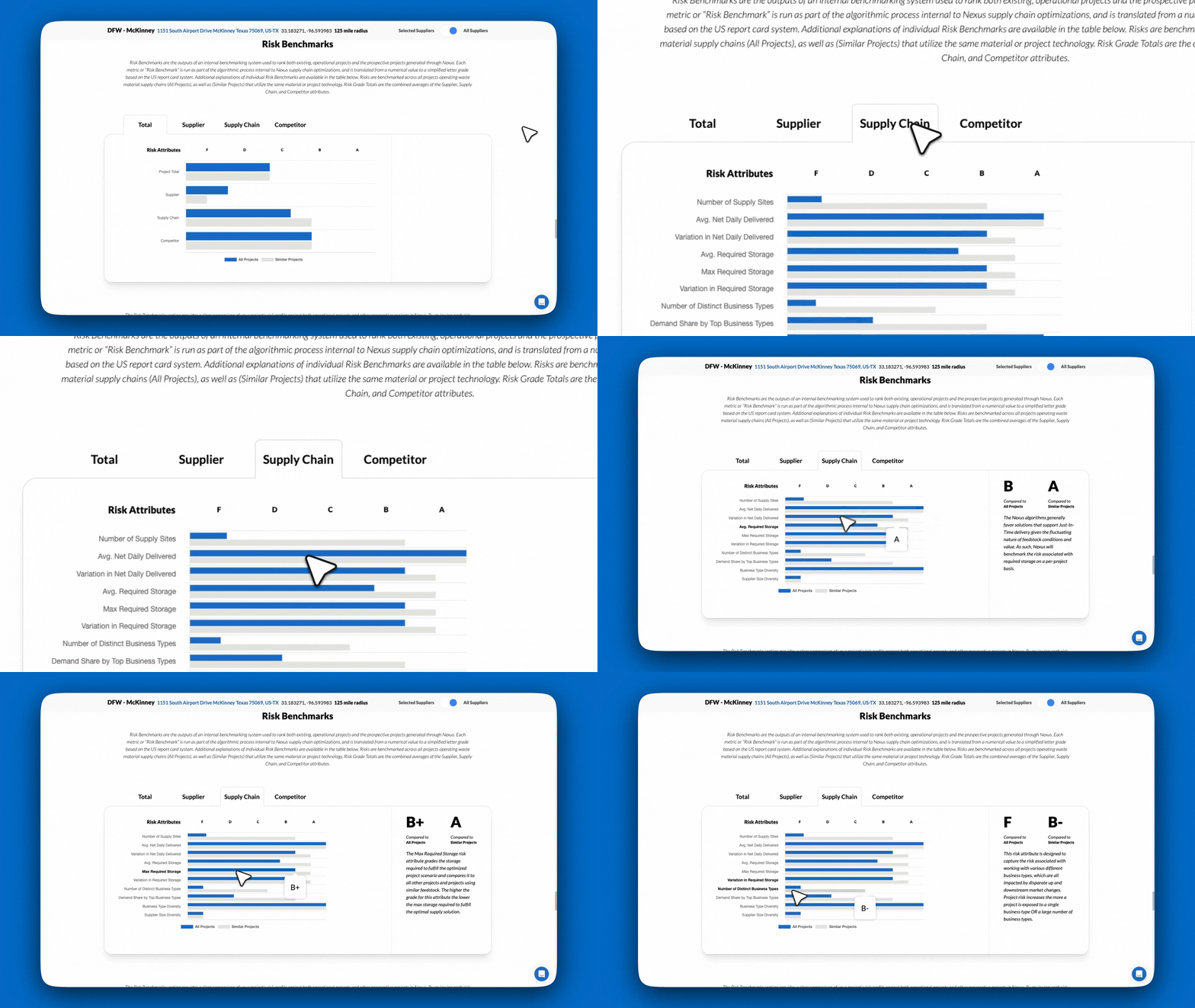
Why most teams take the claim on faith.

The numbers come from someone with skin in the game.
The seller projects 250 tons a day at $58 a ton. The hauler reports 90% diversion. The vendor swears the feedstock is "in hand." Every load-bearing claim in your decision is shaped by someone who needs you to believe it.

You can't independently check most of it in the time you have.
Verifying a single supply commitment means tracking down generators, comparing to historical flow data, cross-referencing permits. Doing that for every claim, on every deal, on the timeline you actually have, isn't practical.

What you do verify won't survive the IC's questions.
A spreadsheet from a junior analyst, a memo with no source citations, a "we checked it" line in the diligence report. None of it is the artifact your IC, your lender, or your audit committee actually accepts.
What it looks like when verification actually holds up.

The records aren't from the seller.
Every claim gets stress-tested against independent records that exist outside the deal. The seller, vendor, or developer doesn't control them. That's the only way verification actually holds.

Verifying takes hours, not weeks.
The records are pre-assembled, classified, and queryable. Take the claim, point it at the data, see what the data says. The verification you used to outsource to a consulting team runs in the time it takes to brief an analyst.

The output is the artifact your IC will accept.
Every claim cited against the underlying record. Every projection compared to the actual data behind it. Every assumption flagged where it doesn't hold. Sourced. Dated. Exportable. The work that used to be a junior analyst's spreadsheet is the artifact that survives the room.
Each claim gets stress-tested against records that exist outside the deal.
Who uses Validate
Investors
Doing pre-deal diligence? Verify the seller's projections, the supply commitments, the diversion claims against independent records. Build the case your IC will accept, on the timeline the deal demands.
Strategic acquirers
Vetting an acquisition target? Stress-test what the target is reporting against what the underlying records actually show. Find the assumptions that won't survive integration.
Operators
Reviewing vendor performance? Cross-check what your haulers and processors are reporting against independent activity records. Catch the gaps before they become contract disputes.
Sustainability teams
Validating ESG claims for reporting? Audit diversion rates, Scope 3 figures, and vendor performance numbers against independent data. Build evidence that holds up to investor questions, audit reviews, and regulator scrutiny.
Where Validate fits in your work
Validation is rarely one and done. The same data layer that lets you verify a claim also lets you survey the market it sits in, compare it against alternatives, design the strategy that follows, and report the verification to your stakeholders. And when the claim updates, or the deal evolves, you re-validate.
Verify a claim with us.
Bring the projection, the commitment, or the diversion rate you need to verify. We'll walk you through the data behind it.
Schedule a demo